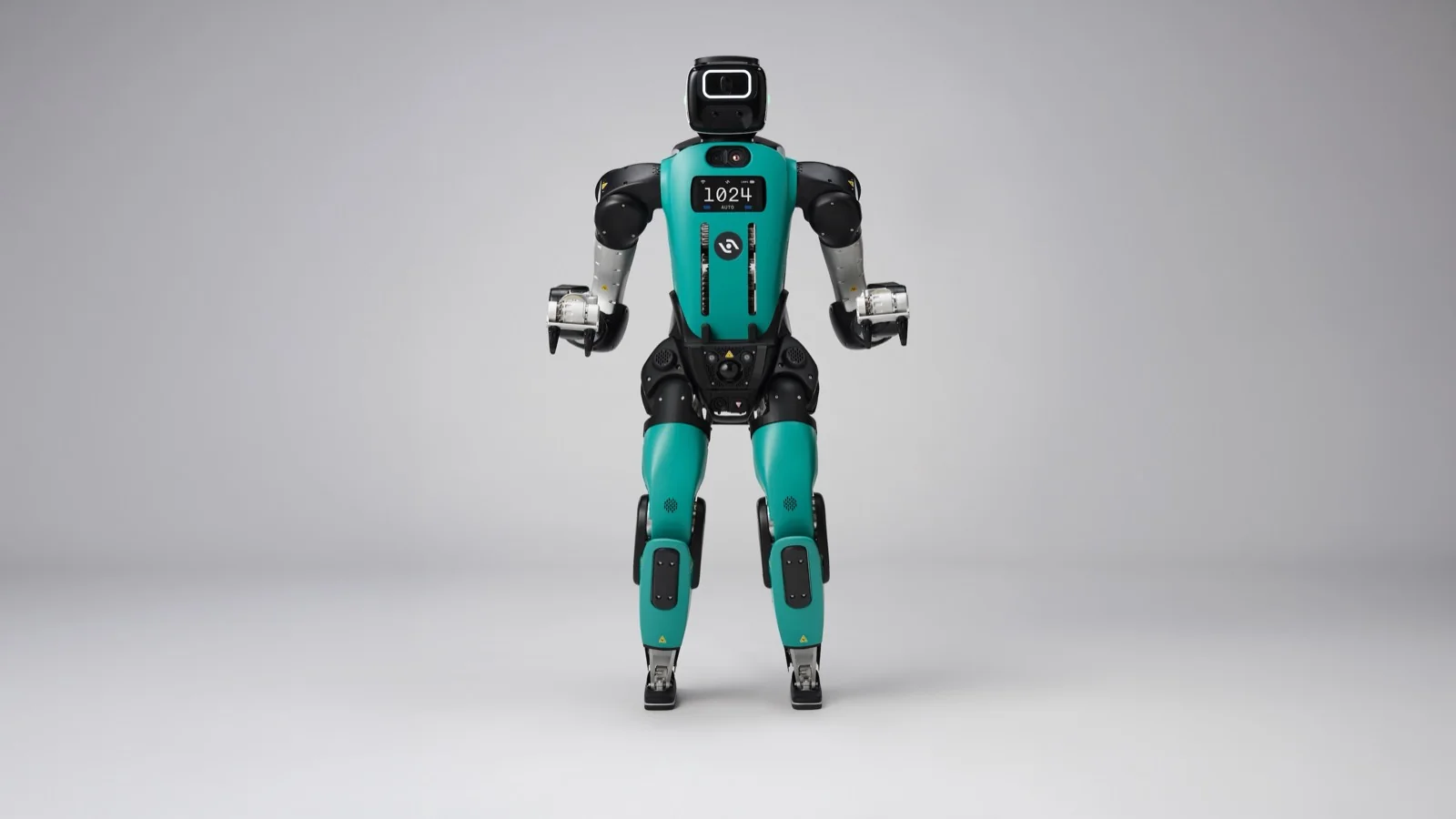
Agility's new humanoid works without a safety cage
Digit 5 charges in 9 minutes, lifts 50 lb, and is built to stop, step aside or sit down when a person walks up to it.
Agility Robotics showed Digit 5 on 15 September. It is the fifth version of the Oregon-built humanoid that has been moving totes in real warehouses for a couple of years, and the headline change is not the hands and it is not the AI. It is that the robot is built to work next to people with nothing between them.
The specs are worth writing down. Digit 5 is 5 feet 11 inches tall, weighs 284 lb, reaches 7.2 feet and repeatedly lifts up to 50 lb, which Agility puts at a 40% payload increase over the last generation. It runs 90 minutes on a charge and recharges in 9 minutes, a 10:1 run-to-charge ratio against 2:1 on Digit 4. Agility's number for that is more than 20 hours of productive work out of a 24-hour day.
The commercial figures are the ones that make it more than a demo. Agility reports more than $300 million in multi-year customer orders as of May 2026, more than 65,000 accumulated operating hours on the previous generation, and named deployments at GXO, Schaeffler, Amazon and Toyota Motor Manufacturing Canada. At GXO's Flowery Branch site the company cites roughly 98% on-task accuracy and a cumulative 100,000 totes.
Why the cage is the expensive part
Anyone who has priced conventional industrial automation knows the machine is half the quote. The other half is guarding: fencing, light curtains, floor space you no longer get to use, and a layout rebuilt so people and equipment never occupy the same square foot at the same time.
Digit 5 is Agility's attempt to delete that line item. The robot uses its own AI and several sensors for 360-degree people detection, then grades the risk and responds: slow down, stop, move out of the way, or lower itself into a seated position if someone gets close. A separate safety controller, independent of the main software stack, owns those responses. There are visual and audible cues so a worker can read what the robot is about to do, which is the part most humanoid demos skip.
Agility says Digit 5 is the first humanoid to pass an independent OSHA field safety evaluation on a live customer production line, and that it is contributing to two standards still being written: ANSI/A3 TR R15.108 in the US and Canada, and ISO 25785-1, the first international safety standard aimed at robots like this one. The company expects Digit 5 to carry a CE mark for the EU and the UK.
What this means for a building in Utah
First, the honest part. You cannot buy one. Early access starts in the first half of 2027 and general availability is set for the end of 2027, and the job Digit does is tote handling and machine tending in manufacturing and distribution, not floors and not room service. If you run a warehouse off I-15 and you were hoping to quote a humanoid this quarter, this is not that announcement.
What does transfer is the standard being set. A robot that shares floor space with your employees now gets judged on whether it has a documented safety story, not on how impressive the video looks. That is a fair question to put to every vendor, including us. When a person steps in front of the machine, what does it do, how fast does it decide, and is there a controller handling that independently of the main software. Is there a written risk assessment for the site. What is the e-stop, and who on your staff is trained to use it. The machines we place in occupied buildings, from floor scrubbers to the T300 and T600 industrial haulers, already run unfenced around people, so those answers should exist on paper before a robot is dropped in a lobby or an aisle.
The 9-minute charge deserves more attention than it will get. Automation does not usually fail loudly. It gets parked because the battery ran flat at 2pm and nobody wanted to wait, and then it stays parked. Run time and charge time together decide whether a machine is in service a year later, which is why we ask about the dock before we ask about the payload.
What to watch
Whether ISO 25785-1 actually publishes, and whether an independent OSHA field evaluation becomes something buyers routinely ask for rather than something one manufacturer volunteers for. Then whether Agility hits the first half of 2027 for early access. Humanoid schedules have slipped before, and an order book is not a delivery.
Robots in this story, sold and serviced from Provo: T300 and T600 industrial delivery
Sources
Want to see one of these working?
We are a Utah robotics implementation company. Our own technicians install and service every machine we sell.
Book a walkthroughMore robotics news
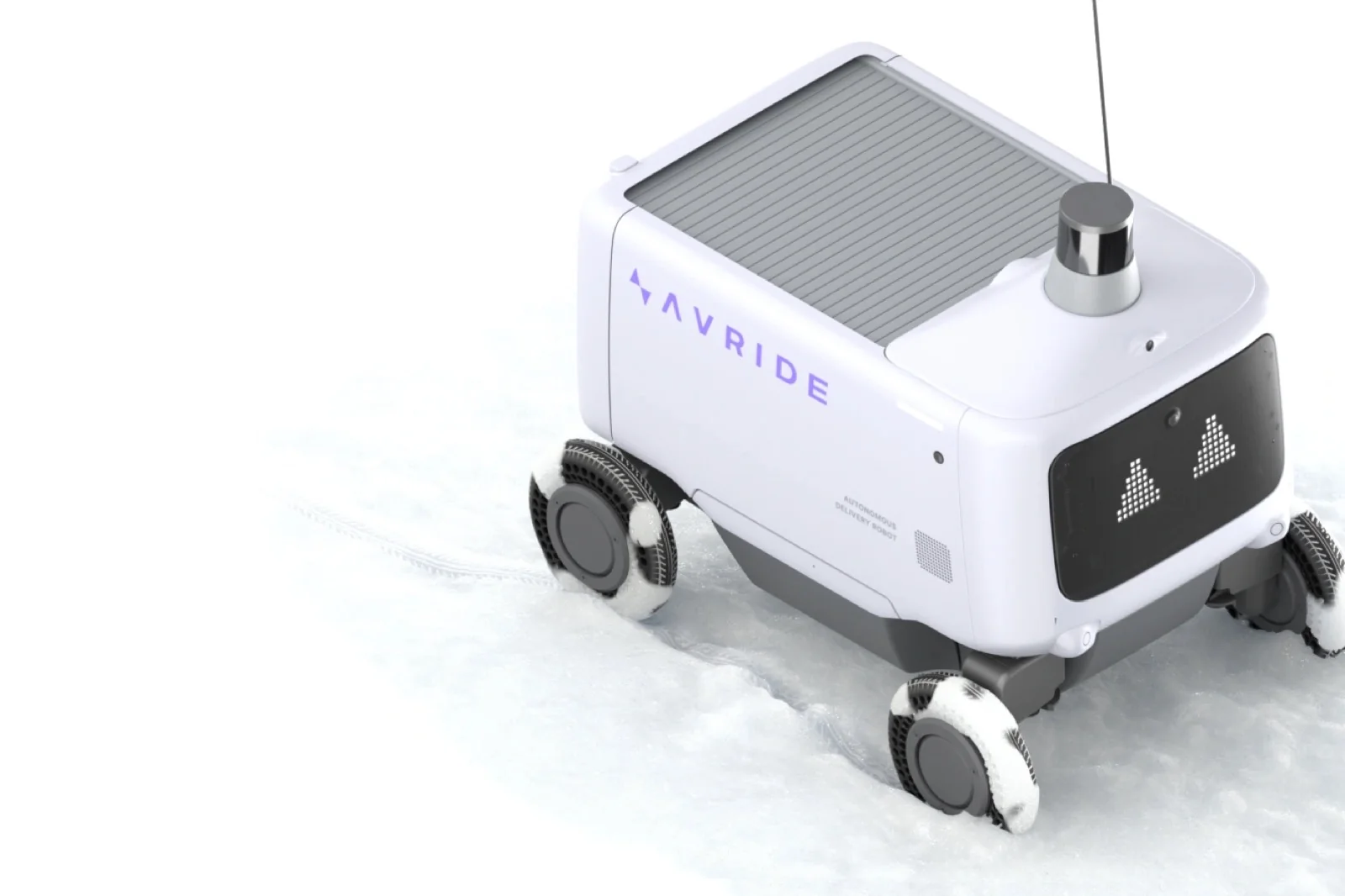
Sodexo signs a robot delivery deal covering 425 campuses
Avride and Sodexo Campus agreed on October 6 to bring sidewalk delivery robots to Sodexo's 425 US colleges, 4 months after Starship said it was leaving.
40 cleaning robot makers on one show floor in Las Vegas
ISSA Show North America opens a robotics area with 40+ autonomous floor cleaning companies and 2 live demo zones at Mandalay Bay, November 17 to 19.
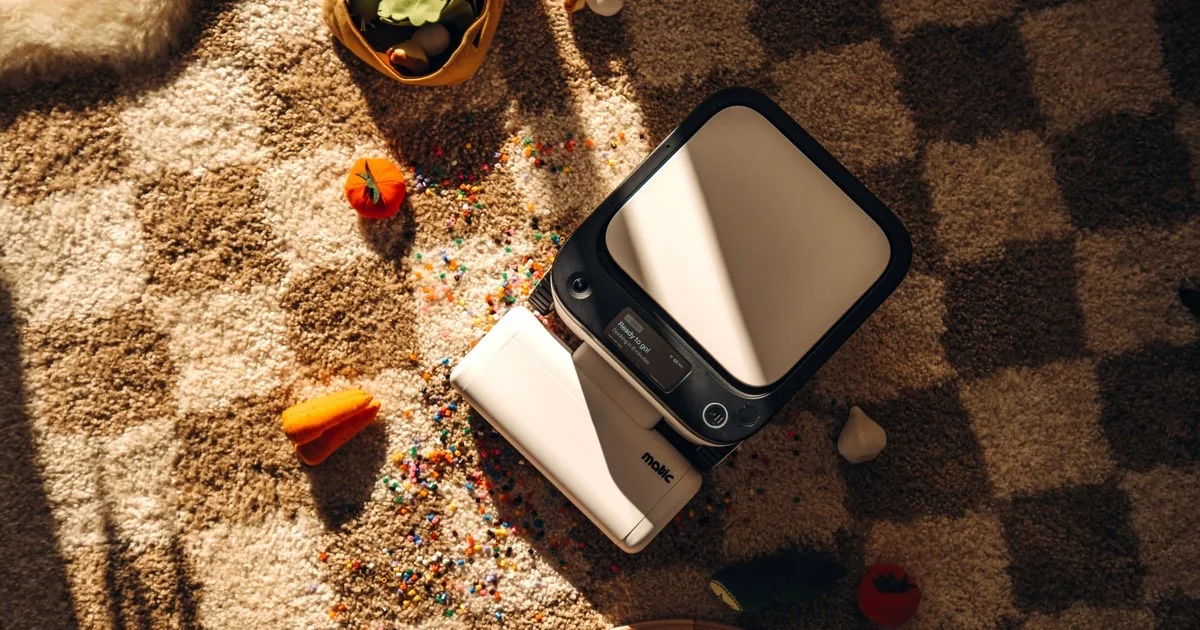
FCC clears its first floor cleaning robot, built in California
Matic's home vacuum and mop became the 3rd robot exempted from the FCC Covered List on October 2. It is assembled in the US and still needed the approval.