Tesla starts Optimus production with no price or delivery date
Tesla says Optimus production began in Fremont on lines built for 1 million robots a year. Its filings give no price and no date for outside buyers.
Tesla has started building its Optimus humanoid robot. In its third quarter update, filed with the SEC on October 21, the company wrote that "Optimus production began in Fremont on our high-volume lines" and that the robots coming off the line "are the first production-quality bots that we have manufactured."
That is a real milestone for the biggest name in the humanoid race. It is also all the letter says. There is no price, no unit count and no date for when a business outside Tesla can buy one.
The numbers
Tesla has been laying this out one quarterly letter at a time, and the 3 filings read together tell the story better than any single headline.
In the Q4 2025 update, Tesla called Optimus Gen 3 "our first design meant for mass production," said it planned to start production before the end of 2026, and gave an "eventual planned capacity of 1 million robots per year." That 1 million figure is the only capacity number Tesla has put in a filing, and it is described as eventual.
In the Q2 2026 update, Tesla said it had torn out the Model S and Model X lines at Fremont to make room, and was installing the first-generation Optimus lines in their place. The same letter said where the first robots go: "The initial Optimus builds will be used in our Optimus Academy for training data collection and further functionality development." In other words, Tesla's first customer for Optimus is Tesla.
The Q3 update moves the California line from "Construction" to "Early Ramp" in its capacity table. A second Optimus line in Texas is still listed as under construction. Neither row carries a capacity figure. For scale, Tesla spent $4,732 million on capital expenditures across the whole company in the quarter, on revenue of $28,046 million, and it does not break out how much of that went to Optimus.
So, against the plan from January, Tesla hit its own deadline: production started inside 2026. What it has not published is how many robots it built, what one costs or who gets them after the Academy.
What this means for a building in Utah
Nothing changes on your floor this year, and probably not next year. That is not a knock on Tesla. It is what the filings say. The first Optimus units are going to Tesla's own training program, and no letter names an outside customer or a ship date. If anyone offers to put an Optimus in your building, ask them where they got it.
It is worth being clear about what a humanoid is for. A general-purpose robot is a bet that one machine can learn hundreds of tasks in spaces built for people: stairs, door handles, a supply closet. That is the right long-term bet for a lot of building work. Restrooms, trash runs and stocking are exactly the jobs today's floor robots cannot touch. But the bet is on software that does not ship yet, inside a robot whose price nobody has published.
Meanwhile, the jobs that do automate today are narrow and repetitive: scrubbing a long corridor, sweeping a warehouse aisle, carrying plates from a kitchen to a table. Those machines exist now, they have published prices and spec sheets, and you can watch one run on your own floor before you sign anything. A CC1 Pro scrubber, for example, is $24,000 cash with RoboCare service at $240 a month. It does one job. It does not pretend to do more.
For a facilities manager writing a budget for 2027, the practical read is simple. Put the money where a machine can do a task you can measure this year, and keep watching humanoids as a line item for later. Nobody needs to hold off on a floor scrubber waiting for a robot that might one day scrub floors, take out the trash and restock paper towels. When that robot shows up with a price tag, the scrubber will have paid its way or it will not, and you will know which from the logs.
There is one more thing a Utah operator should notice. Tesla's plan runs through its own factories first. Humanoids are being proven in plants and warehouses, where the floor is flat, the tasks repeat and the company owns the building. Schools, offices and dealerships are messier. Expect them to come later in the line, not first.
What to watch
Tesla's next quarterly update, covering Q4 2026, is where Tesla will either give a unit count for Optimus or keep the "Early Ramp" label without one. Watch for 3 things in it: a number of robots built, any mention of an outside customer, and whether the Texas line moves out of construction. Any one of those would be the first hard signal that a humanoid you can buy is a 2027 story rather than a later one. Until a price appears in a filing or on an order page, treat every Optimus price you read as somebody's guess.
Robots in this story, sold and serviced from Provo: CC1 Pro floor scrubber
Sources
Want to see one of these working?
We are a Utah robotics implementation company. Our own technicians install and service every machine we sell.
Book a walkthroughMore robotics news

Pudu's robot elevator controller earns CSA safety certification
Pudu says the box that lets its robots call elevators is now certified to CSA B44.1/ASME A17.5, the North American elevator electrical standard.
Tennant's first robot vacuum was tested in a school district
Tennant launched the P1 VAC on October 20, a 101 lb robot that vacuums, sweeps and dust mops, with 3.5 hours of runtime. A Wisconsin district tested it.
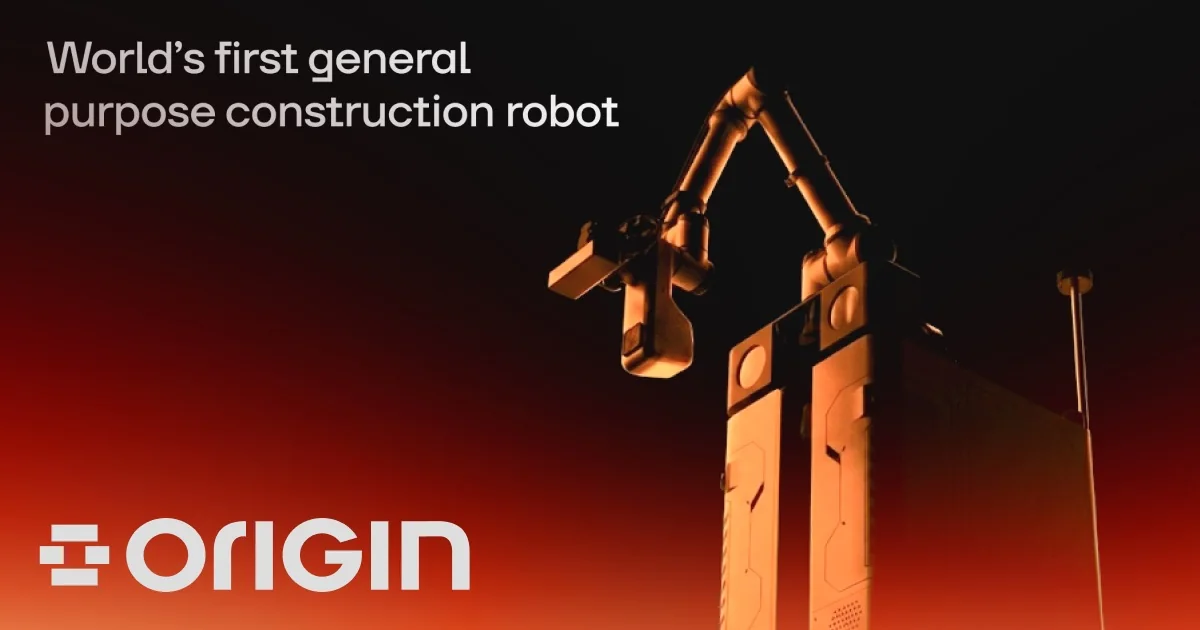
A wall-finishing robot raises $20M as crews run short
Origin came out of stealth on October 15 with $20M for OG-1, a robot that applies compound, sands and primes walls up to 14 ft. It wants 150 deployed by 2027.