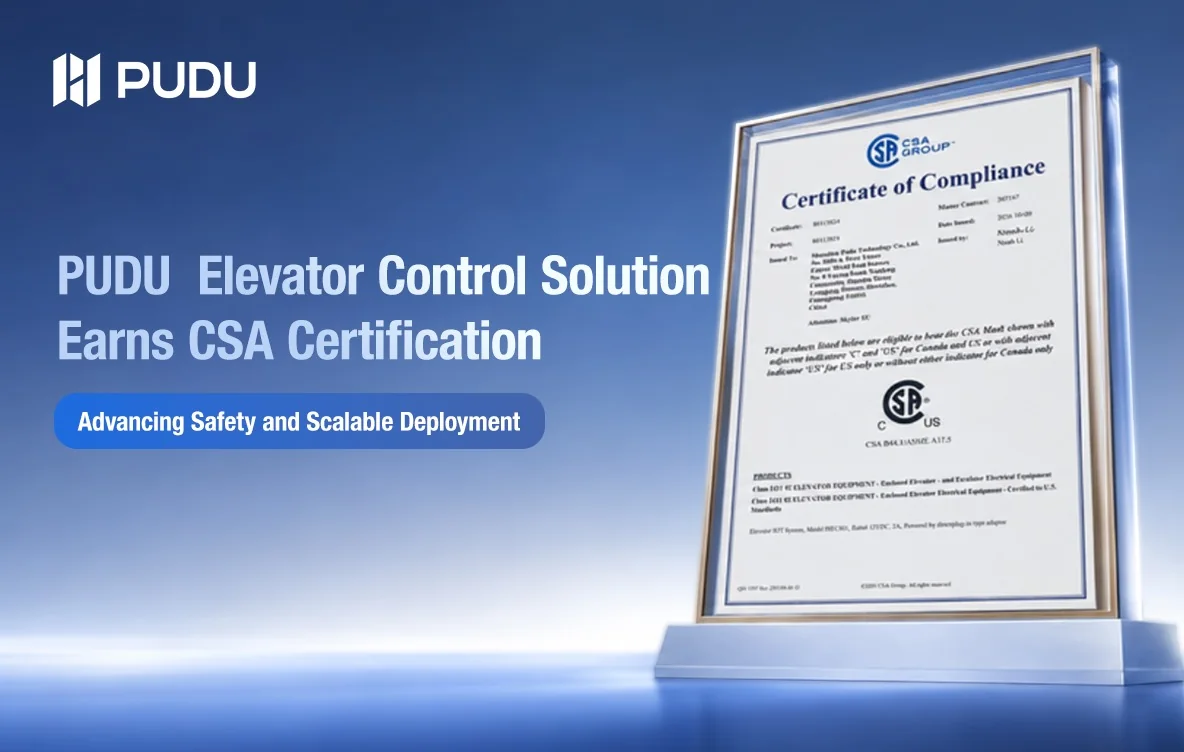
Pudu's robot elevator controller earns CSA safety certification
Pudu says the box that lets its robots call elevators is now certified to CSA B44.1/ASME A17.5, the North American elevator electrical standard.
Pudu Robotics says the hardware its robots use to call and ride elevators has been certified by CSA Group to CSA B44.1/ASME A17.5, the joint North American standard for elevator electrical equipment. The company announced it on October 23 and says it is the first robotics company in China selling elevator control to earn that certification.
That sounds like paperwork. For anyone who has tried to get a robot onto an elevator in a real building, it is the paperwork that usually stops the job.
What Pudu certified
The product is Pudu's own elevator control solution, the module that sits between a robot and the elevator controller so the robot can call a car, pick a floor and get off on the right one. According to Pudu, the certification covers "electrical safety, structural design, and operational reliability" within its certified scope.
The standard is not a robot standard. CSA B44.1/ASME A17.5 is the electrical equipment standard written jointly by CSA Group and ASME for elevators, escalators, dumbwaiters and lifts. It covers motor controllers, motion controllers, operation controllers, operating devices and other electrical equipment not already certified under another safety standard, on supply circuits of 600 V or less. Its stated purpose is to reduce the risk of fire and electrical shock.
The numbers Pudu published:
- 10,000+ robots supported by its elevator control in deployments worldwide
- Native RS-485 connection, which Pudu says works with Otis, KONE, Mitsubishi and others, with hardware or cloud options so the existing elevator does not get replaced
- Multi-robot, multi-elevator scheduling in what it calls Elevator Control 3.0, including dual-door cars and task preemption, aimed at high-rise buildings
- Cloud or private deployment, which Pudu says keeps multi-floor runs working without 4G coverage or on a weak network
Pudu also says the same interface is meant to work across its whole robot lineup, delivery and cleaning alike. That is the company's claim, and it is worth checking model by model before anyone plans a building around it.
What the release does not give: a certificate number, the exact models covered, a price for the module, or which US buildings are running it.
Why the elevator is where most projects stall
A robot that works one floor is easy to place. A robot that has to cover 4 floors either rides the elevator, or someone carries it, or you buy 4 robots. The first option is the one everyone wants, and it is the one that brings in the people who own the elevator: the elevator contractor, the building engineer and, in most states, an inspector.
Their first question is never about the robot. It is what is being connected to the controller, and whether it is listed. A certification to the same standard the elevator equipment is built to gives the contractor something to put in the file.
Last month we covered the other half of this, a robot given its own badge for locked doors. Doors and elevators decide how much of a building a robot can actually reach.
What this means for a building in Utah
Utah enforces elevator safety through the Labor Commission. The state's rule adopts ASME A17.1-2019/CSA B44-16, with Utah amendments, as the safety code for elevators and escalators.
The part an owner needs to read is in the Division's Elevator/Escalator Compliance Manual. It defines an alteration as "any change to equipment other than maintenance, repair or replacement." When an elevator with a valid permit is altered or remodeled, the manual says the Certificate of Inspection/Permit to Operate "becomes invalid," and the car has to pass an acceptance inspection by the Division before the public can use it again. The manual also says each alteration is assessed case by case, with the code requirements set in writing by the Division.
Whether wiring a robot module into your controller counts as an alteration is the Division's call, not ours, and it can depend on how the connection is made. The conversation goes better when the elevator contractor is in it before installation day, and when the module carries a recognized North American mark.
Practically, for a building here:
- If you run a hotel, hospital or office with deliveries between floors, plan the elevator first. The Pudu FlashBot is the multi-floor delivery robot we sell; it calls the elevator on its own and is $20,000 on our published price list. Whether it can ride your elevators gets confirmed at the site survey, with your elevator company.
- If you are looking at floor cleaners for a multi-story building, decide early between one machine per floor and one machine riding the elevator, and confirm the exact model against your elevator make.
- Whatever you buy, ask for the certificate and the model it covers, and give it to your elevator contractor before anything is connected.
What to watch
Whether Pudu publishes the certificate details and the exact module models it applies to, and whether the major elevator companies start naming certified robot interfaces in their own service terms. The bigger signal will be the first state inspectors treating a listed robot module as routine rather than as a custom job. When that happens, the multi-floor building stops being the hard case for service robots.
Robots in this story, sold and serviced from Provo: FlashBot multi-floor delivery
Sources
Want to see one of these working?
We are a Utah robotics implementation company. Our own technicians install and service every machine we sell.
Book a walkthroughMore robotics news
Tesla starts Optimus production with no price or delivery date
Tesla says Optimus production began in Fremont on lines built for 1 million robots a year. Its filings give no price and no date for outside buyers.
Tennant's first robot vacuum was tested in a school district
Tennant launched the P1 VAC on October 20, a 101 lb robot that vacuums, sweeps and dust mops, with 3.5 hours of runtime. A Wisconsin district tested it.
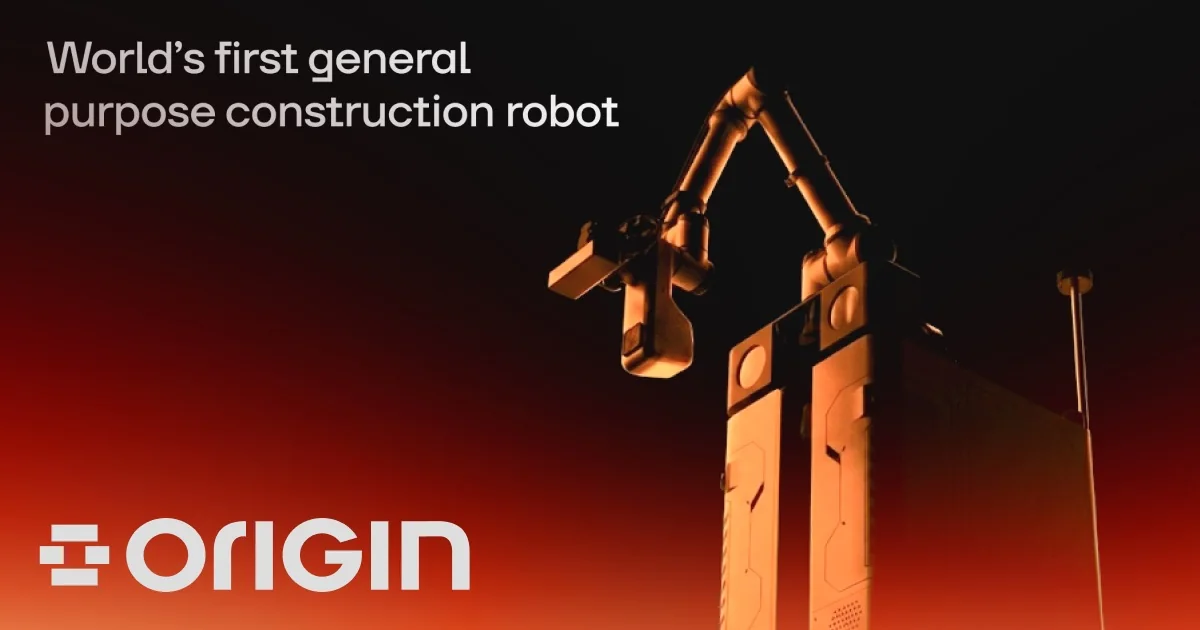
A wall-finishing robot raises $20M as crews run short
Origin came out of stealth on October 15 with $20M for OG-1, a robot that applies compound, sands and primes walls up to 14 ft. It wants 150 deployed by 2027.