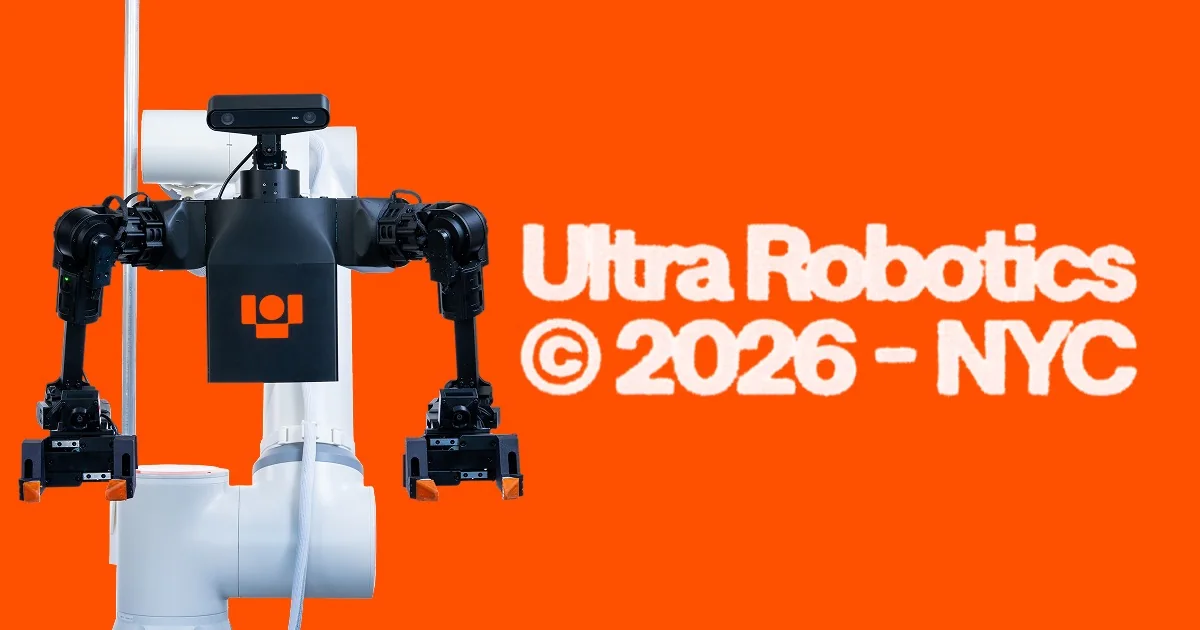
A packing robot that plugs into a 120V outlet raises $62M
Brooklyn's Ultra raised a $50M Series A on October 9 for OP1, a 2-armed packing robot it rents to warehouses by the month. It says it has packed 500,000+ orders.
Ultra, a 2-year-old Brooklyn robotics company, raised a $50 million Series A on October 9 led by Framework Ventures, bringing its total to $62 million. It builds one machine, the OP1 Operator, a 2-armed robot that stands at a packing station and does the job a person does there: pull items from a tote, bag or box them, seal and label.
It does not sell them. Warehouses pay an up-front integration fee and then a monthly fee that covers hardware and software support. That model, more than the funding, is the part worth a look.
The numbers
Ultra's own specification page is unusually plain about what the robot needs from the building:
- A 5 by 5 ft footprint, with a work area up to 10 by 10 ft
- Reach from the floor to 10 ft
- A standard 120V outlet, 10A peak draw
- A dedicated 10 Mbps Ethernet connection
- Up to 10 lb per arm
- Locking caster wheels, so staff can roll it to another station
- A 3-month trial before you scale up
Ultra says the robot is up and running in hours and works up to 24 hours a day. SiliconANGLE reported a company claim of up to 1,000 items a day per unit, and that the robot handles sorting, kitting and packing into envelopes and poly bags.
Across all customers, Ultra told Fortune it has packed more than 500,000 orders. It did not disclose revenue, robot count, customer names or a single price, and its CEO said it has raised prices since launch.
The autonomy figure comes from its software partner. Physical Intelligence, the AI company whose models run the robot, showed an Ultra unit packing orders at a customer site for a full shift at 96.4% autonomy. That is one shift at one site, published in February. The rest of the time a remote person steps in.
One customer on the record
The clearest picture of a real deployment is from July. Automated Warehouse reported that Highline Commerce, a third-party logistics company in Brooklyn, runs 3 OP1 systems that handle up to 30% of its orders at a 60,000 sq ft facility. Autonomy started around 70% and moved into the 90% range in about 3 months. Highline began on a per-order fee, then switched to a monthly fee to push utilization, and ordered more robots for peak season. Ultra told the publication it expected 100 deployments by the end of 2026.
What this means for a warehouse in Utah
The Wasatch Front is full of the kind of building this robot was designed for: e-commerce fulfillment and 3PL space where people stand at pack stations for a full shift. Packing is repetitive, the items are light, and it is the job that is hardest to staff in November.
The building requirements are modest, but read them like a facilities manager. A 10A peak draw on a 120V circuit is a real share of a 15A circuit, so put it on a circuit you know rather than a power strip shared with a label printer and a heater. A dedicated Ethernet drop at every station you might roll it to is cheap to run before the robot arrives and annoying after. And 25 sq ft for the base, with 100 sq ft of reach, means the station layout around it has to change.
The rental model cuts both ways. A 3-month trial and a monthly fee keep the risk off your balance sheet, and that is the right way to test a robot whose performance improves with data. But without a published price you cannot compare it with a hire, and a fee that has already gone up once may go up again. Ask for the fee per month, the integration fee, the term, and what happens to the price at renewal before the trial starts.
Packing is also only one stop in the building. Before an order reaches a pack station, somebody pushes the tote there. Moving carts and totes between zones is a separate job for a separate kind of robot, such as our Pudu T300, which we sell at $20,000 cash and which carries up to 661 lb between stations rather than packing anything. The two problems are worth solving in that order only if walking is where your labor actually goes. Time it before you buy anything.
What to watch
Watch whether Ultra reaches its 100 deployments by year-end, and whether it publishes a price. Watch the autonomy number move from one shift at one site to a fleet average. And watch peak season. The first December with dozens of these robots on pack lines will show whether 1,000 items a day holds when the orders are mixed and the totes are messy.
Robots in this story, sold and serviced from Provo: T300 and T600 industrial delivery
Sources
Want to see one of these working?
We are a Utah robotics implementation company. Our own technicians install and service every machine we sell.
Book a walkthroughMore robotics news
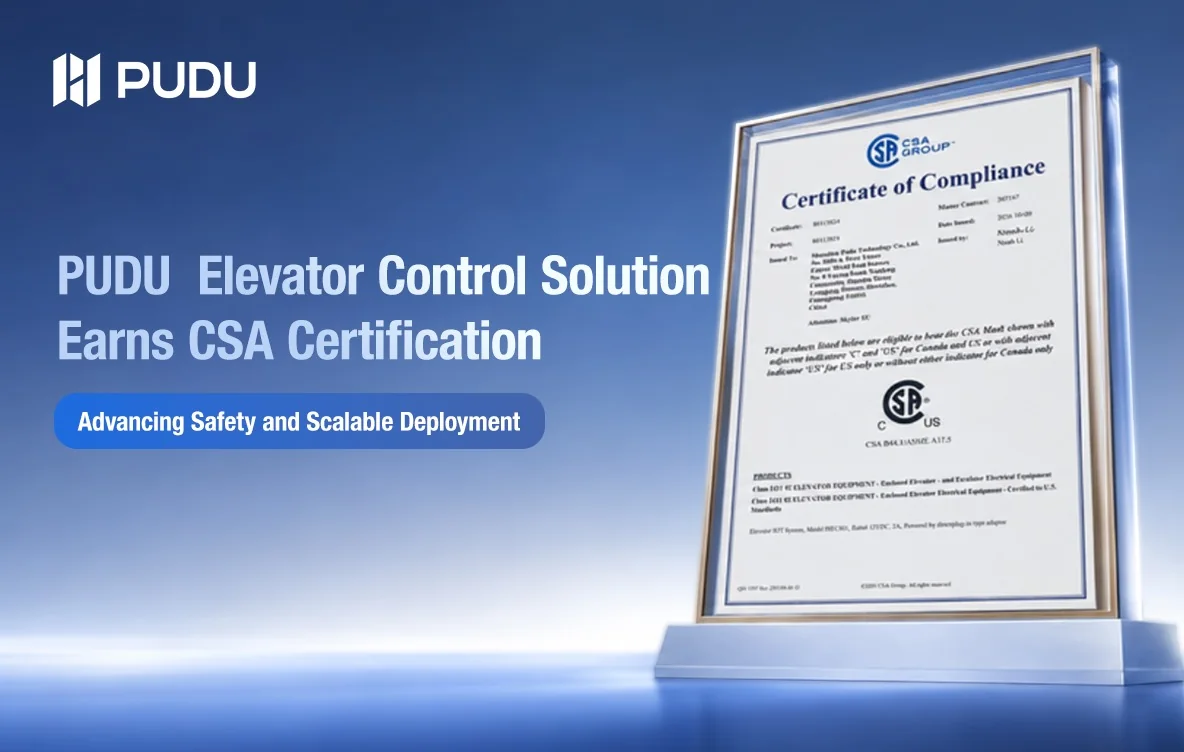
Pudu's robot elevator controller earns CSA safety certification
Pudu says the box that lets its robots call elevators is now certified to CSA B44.1/ASME A17.5, the North American elevator electrical standard.
Tesla starts Optimus production with no price or delivery date
Tesla says Optimus production began in Fremont on lines built for 1 million robots a year. Its filings give no price and no date for outside buyers.
Tennant's first robot vacuum was tested in a school district
Tennant launched the P1 VAC on October 20, a 101 lb robot that vacuums, sweeps and dust mops, with 3.5 hours of runtime. A Wisconsin district tested it.