US factories installed 38,400 robots in 2025, up 12%
The IFR says the US passed Japan to become the 2nd largest industrial robot market, with food and beverage plants up 30%.
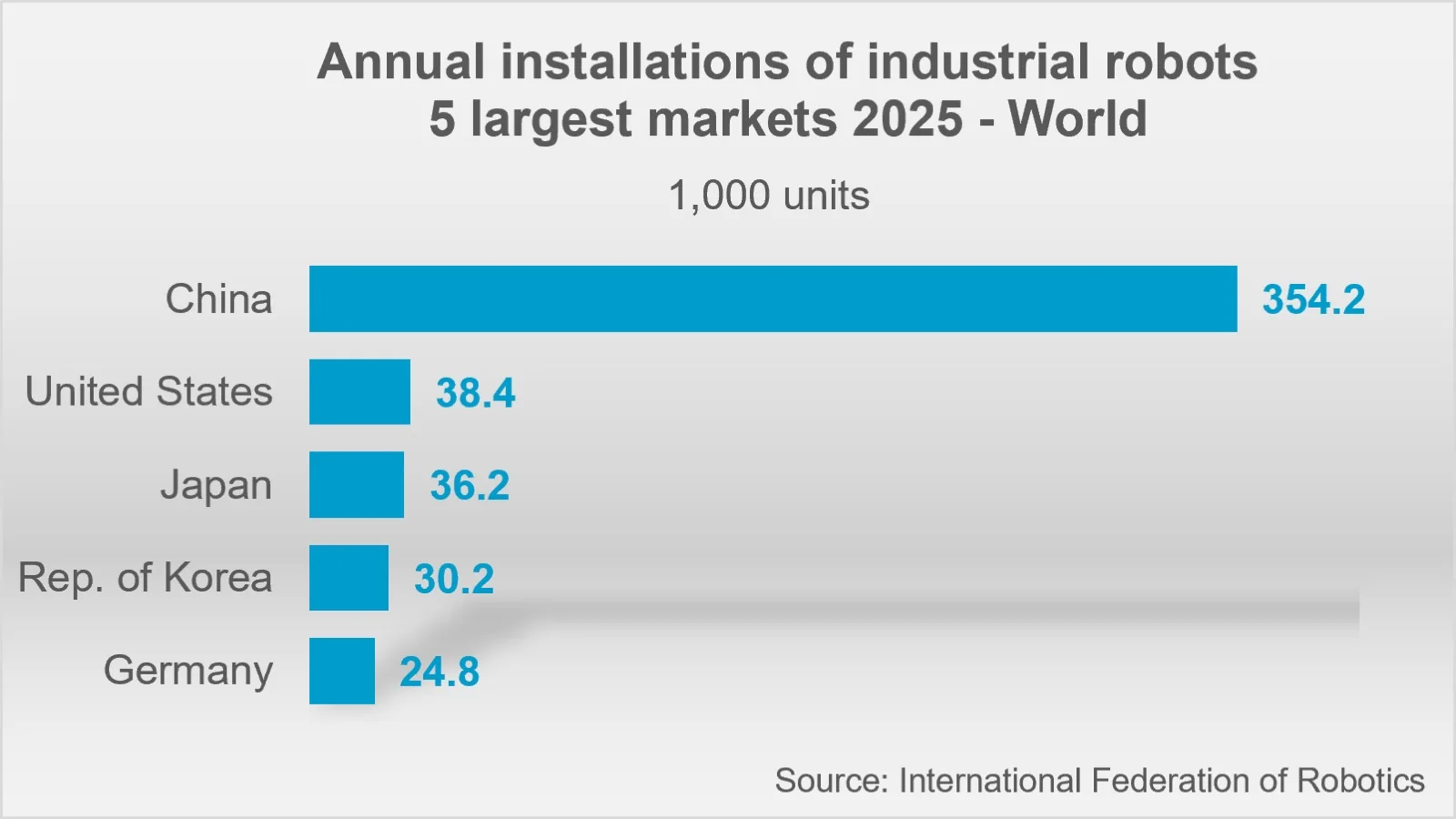
US manufacturers installed 38,400 industrial robots in 2025, 12% more than the year before, and passed Japan to become the 2nd largest robot market in the world after China. The International Federation of Robotics published the figures on September 24 in its World Robotics 2026 release for the US.
The fastest growth was not in car plants. It was in food.
The numbers
The IFR counts industrial robots, the arms and cells bolted into production lines. It does not count floor cleaners, delivery robots or anything else that rolls around a building, which it tracks separately as service robots.
Inside that definition, the US picture for 2025 looks like this:
- 38,400 installations, up 12%, against 36,200 in Japan
- Automotive still the largest customer at 13,500 units, down 1%
- Metal and machinery 2nd at 3,000 units, down 15%
- Food and beverage at 2,900 units, up 30%
The IFR's president, Jane Heffner, called 2025 "the third strongest year on record behind 2018 and 2022," and said "growth came from the food industry and sectors like warehousing, logistics or medical."
For scale, the IFR's global release puts the worldwide count of working factory robots at a record 5 million, and China installed 354,200 units last year on its own, 59% of the world total. The US is 2nd, but it is a distant 2nd. The IFR's own release also notes that most robots installed in the US are still imported from Japan and Europe.
One small housekeeping note: the global release rounds the US figure to 38,500, the US release says 38,400. We are using the US release's number.
Why food is the number to watch
Automotive has been the biggest buyer of robots in America for decades, so a flat year there is not news. A 30% jump in food and beverage is. Food plants are a harder place to put a robot than a car plant: products vary, lines change often, and equipment near food has to survive washdown. The IFR does not say why the sector bought 30% more last year, but a jump that size in a hard sector is the kind of number that gets other plant managers asking the question.
The IFR's outlook for the US is plain about both sides. It says trade tensions will be "a burden in the short term," and that reshoring and labor scarcity "will provide excellent opportunities for robotics in the long run."
What this means for a building in Utah
If you run a plant or a distribution building in Utah, the robot on your production line and the robot in your aisles are 2 different purchases, from 2 different kinds of vendor, and this report is about the first one.
That distinction matters because the line is usually automated before the rest of the building. A plant can spend 7 figures on robot cells and still move pallets between them with a forklift, carry parts on a cart and clean the floor with a walk-behind scrubber on overtime. Those are the jobs where people are now the constraint, and they are the jobs that do not need a systems integrator or a line shutdown to automate.
Two examples from our own list. The Pudu T300 is an autonomous delivery robot that carries up to 661 lb between stations on a set route, and it is $20,000 on our published price list. The MT1 family sweeps warehouse aisles and plant floors on a schedule, without anyone walking behind it. Neither one touches food, and neither one replaces a line robot. They go after the walking.
The other thing worth taking from this report is timing. When a whole sector is buying robots at 30% more a year, the integrators, the technicians and the spare parts get busier too. If automation is in your 2027 budget, start the site walk and the route plan now, not the week the purchase order is signed.
What to watch
The IFR's companion report on service robots, which counts professional cleaning and delivery machines, is the one that speaks directly to buildings rather than production lines. Watch for its numbers on professional cleaning robots. On the industrial side, watch whether food and beverage holds its growth in 2026 once the IFR has the full-year count, and whether the US keeps the 2nd place it just took from Japan.
Robots in this story, sold and serviced from Provo: T300 and T600 industrial delivery · MT1 sweeper
Sources
Want to see one of these working?
We are a Utah robotics implementation company. Our own technicians install and service every machine we sell.
Book a walkthroughMore robotics news
Sodexo signs a robot delivery deal covering 425 campuses
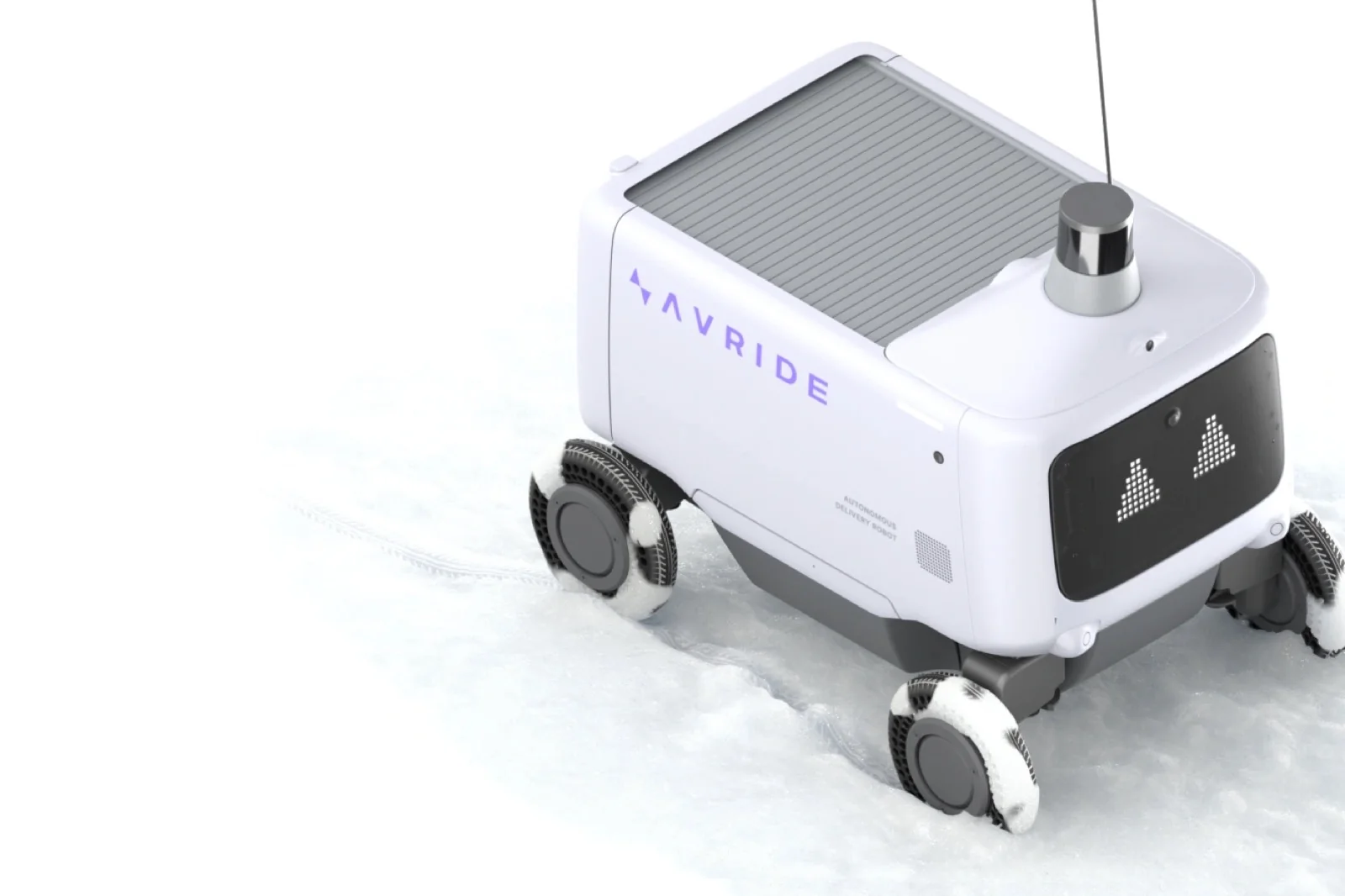
Avride and Sodexo Campus agreed on October 6 to bring sidewalk delivery robots to Sodexo's 425 US colleges, 4 months after Starship said it was leaving.
40 cleaning robot makers on one show floor in Las Vegas
ISSA Show North America opens a robotics area with 40+ autonomous floor cleaning companies and 2 live demo zones at Mandalay Bay, November 17 to 19.
FCC clears its first floor cleaning robot, built in California
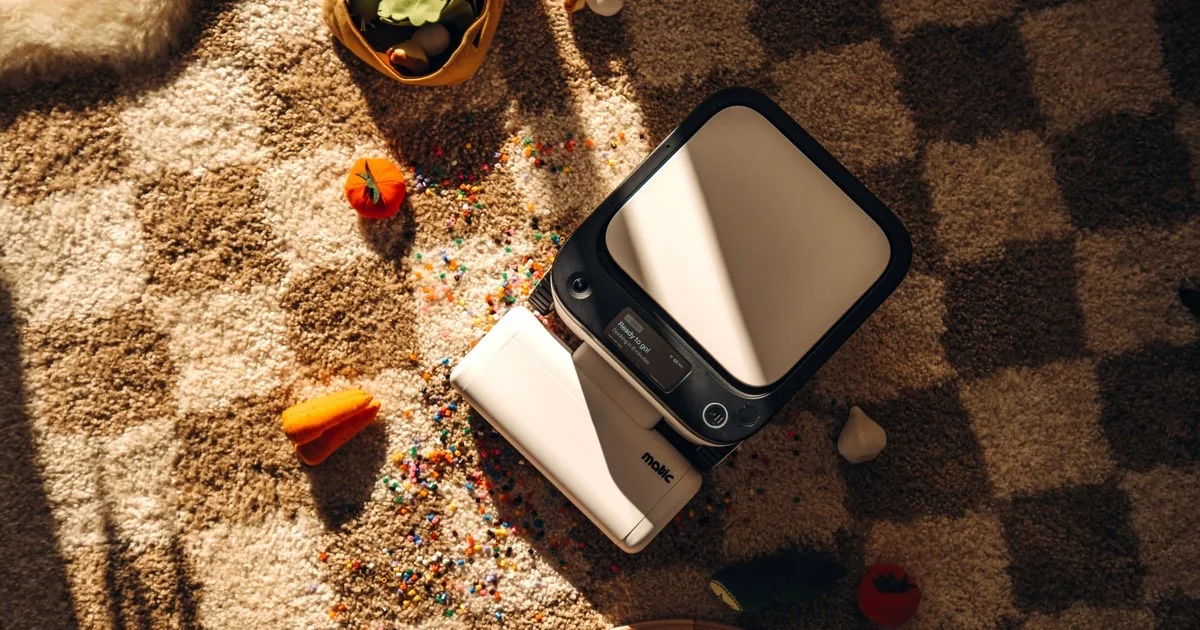
Matic's home vacuum and mop became the 3rd robot exempted from the FCC Covered List on October 2. It is assembled in the US and still needed the approval.